Tigris River Protectors Association
In cooperation with civil society organizations and volunteer groups in Iraq signed below
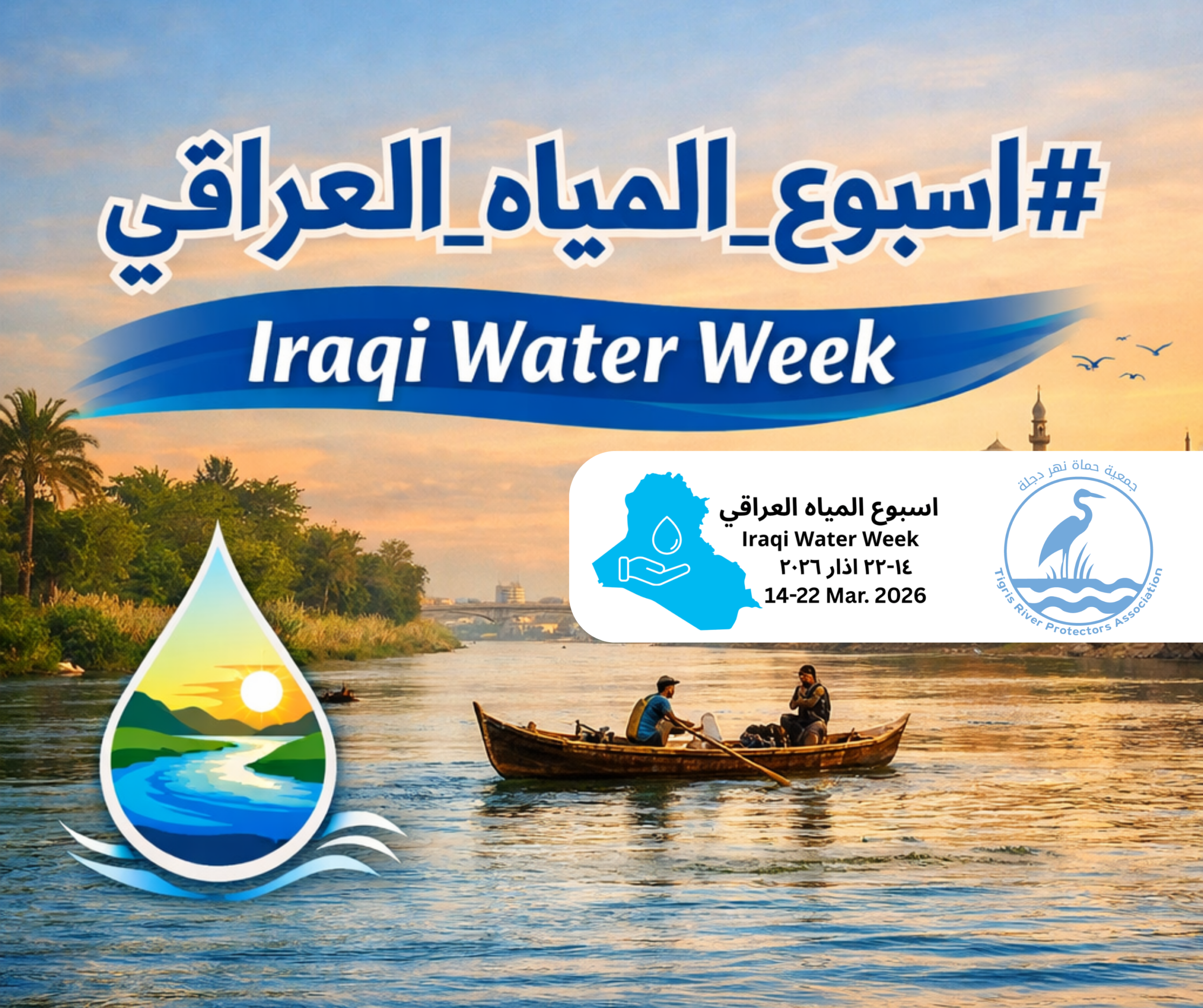
Based on our national and humanitarian responsibility toward our water resources, and our belief that water is a fundamental right of life, we, the undersigned, declare our full solidarity with the objectives of Iraqi Water Week, which runs from 14 March (World Rivers Day) to 22 March (World Water Day). We renew our commitment to protecting the Tigris River and the Euphrates River from the dangers of liquid and solid pollutants.
Iraq’s rivers are facing complex environmental pressures resulting from the discharge of untreated or partially treated wastewater. This is due to the limited number of treatment plants, the aging of many facilities, the fact that many have exceeded their designed operational lifespan, as well as their low efficiency and the lack of regular modernization and maintenance. The continued operation of deteriorated or partially dysfunctional wastewater treatment plants means that large amounts of organic, chemical, and microbial pollutants flow into the rivers, further worsening water quality and increasing the cost of treating water for drinking and agricultural use.
In addition, riverbanks and waterways are exposed to the accumulation of agricultural waste loaded with fertilizers and pesticides, construction debris, rubble, and concrete blocks, as well as solid and plastic waste. In some areas that have experienced armed conflicts, war remnants, fortifications, and concrete blocks are still present in or along waterways, obstructing the natural flow of water and increasing the risk of pollution.
We warn that if this situation continues in the near future, it will lead to an increase in waterborne diseases, a decline in fish stocks, worsening problems of foul odors and algae blooms, as well as contamination of drinking water. In the long term, the absence of fundamental solutions and institutional modernization may lead to the gradual collapse of river ecosystems, the depletion of biodiversity, increased conflicts over water resources, and a deepening of the water and food security crisis in Iraq.
Based on the role of civil society organizations in oversight and community engagement, this statement specifically aims to call for the adoption of an urgent national plan to rehabilitate and upgrade wastewater treatment plants, prevent the discharge of any water that does not meet environmental standards into rivers, and launch a national program to remove solid waste, construction debris, and military remnants from riverbanks and waterways, while ensuring transparency and accountability in managing this issue.
We consider this statement a document of ethical and national commitment, and we call on all institutions, organizations, volunteer groups, activists, and individuals to sign it and actively participate in the activities of Iraqi Water Week, as well as use this year’s campaign slogan in their activities, expressing a unified position for clean rivers and a safe future.
This statement represents a unified stance by civil society organizations in defense of the Iraqi people’s right to clean and safe water, and in protection of the cultural heritage that flourished along the banks of the Tigris and Euphrates rivers.
Together we protect our water… together we safeguard the Tigris and Euphrates rivers.
Signatories to the statement below: