At a time when we are closely following the development of renewable energy projects in Iraq, including the solar energy project in Basra led by TotalEnergies, we have received documented field information that raises serious concern about what is happening on the ground.
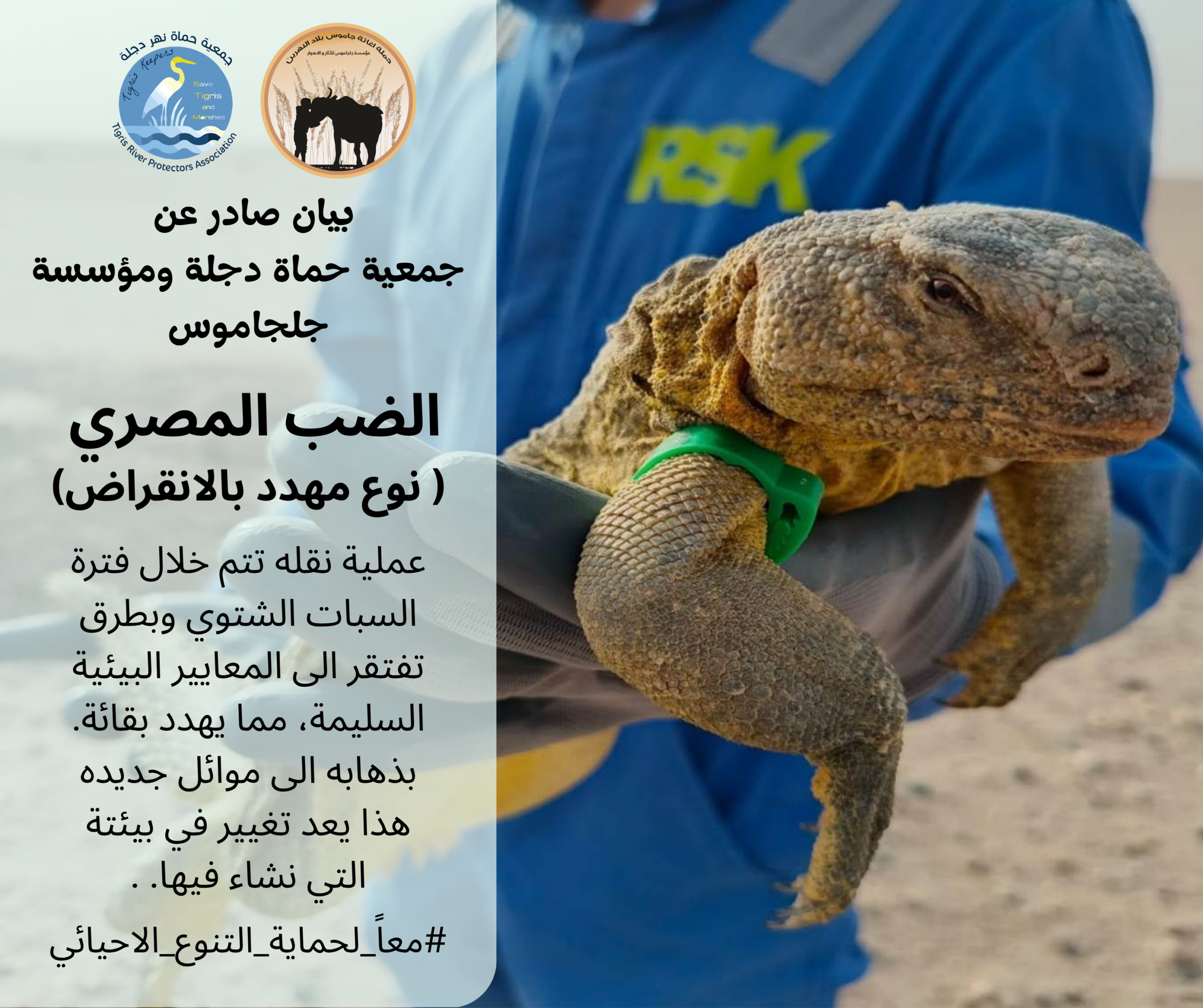
These reports indicate that the project activities involve the relocation of the Egyptian spiny-tailed lizard (Uromastyx aegyptia) from its natural habitat. According to what has been documented, this process appears to lack even the most basic environmental protection standards. It is reported that relocation is taking place during the animals’ winter hibernation period, with individuals being placed into excavated holes without proper environmental preparation to ensure their survival or adaptation.
In the absence of publicly available information regarding an Environmental Impact Assessment (EIA) or clear wildlife management procedures for such projects, legitimate questions arise concerning the awareness and oversight of the Ministry of Environment of Iraq regarding these practices, and whether they comply with recognized standards for protecting species classified as vulnerable by the IUCN.
Furthermore, the noticeable increase in the appearance of this species in local markets in recent times raises additional concerns. This trend prompts questions as to whether it is linked to ongoing relocation activities—whether through displacement from their natural habitats, failure to adapt to new environments, or exploitation through capture and trade.
We, at the Tigris River Protectors Association and the Gilgamesh Foundation, reaffirm our support for the transition toward clean energy. However, we strongly believe that environmental protection and biodiversity conservation must be integral components of any development project.
Accordingly, we call upon the Ministry of Environment of Iraq to clarify the facts of what is taking place, outline the measures being implemented, and respond to these concerns in a transparent manner that ensures the protection of Iraq’s environment.
📅 May 3, 2026
CC:
Mr. Jasim Abdulaziz Hamadi
Basra Environment Directorat