Conclusion of the Climate Action Hackathon Training in Tal Afar and Al-Ayadiyah
Youth at the Forefront of Climate Solutions and Water Resource Management in Nineveh
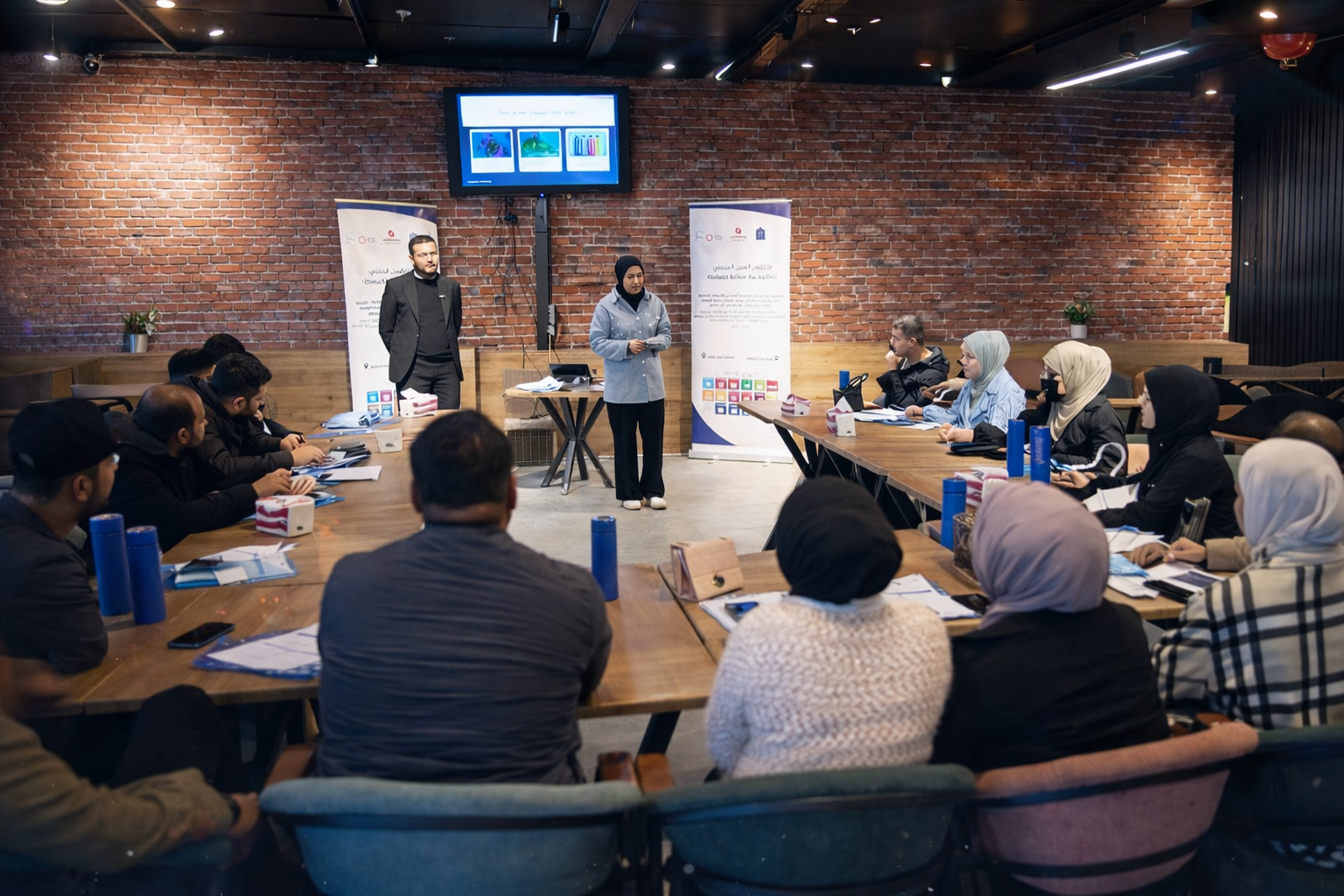
The Climate Action Hackathon training concluded in the cities of Tal Afar and Al-Ayadiyah after two intensive days of collaborative and hands-on work. The activity was part of a strategic pathway aimed at building the capacities of active youth in protecting water and environmental resources, and empowering them to design innovative initiatives that respond to the escalating challenges posed by water scarcity and climate change in Nineveh Governorate.
This training was implemented within a series of specialized activities focused on transforming environmental awareness into practical action, by engaging youth in an experiential learning environment and stimulating critical and collective thinking to produce realistic, locally applicable solutions—particularly in fragile areas affected by conflict and accelerating climate impacts.
Training Methodology and Themes
The hackathon adopted a modern participatory methodology that combined theoretical input with practical application. On the first day, participants were introduced to:
- Concepts of climate change and its direct impact on water resources in Iraq.
- The relationship between sustainable water management and environmental and social security.
- Tools for analyzing environmental problems and identifying stakeholders.
- Mechanisms for setting priorities based on impact, feasibility, and available resources.
The second day was dedicated to practical work. Participants were divided into youth teams that developed environmental initiative ideas focusing on:
- Adapting to water scarcity in local communities.
- Mitigating climate change impacts through low-cost, environmentally friendly solutions.
- Raising community awareness and changing behaviors that threaten water resources.
- Enhancing community participation—especially of women and youth—in environmental protection.
Hackathon Outputs
The training resulted in a range of practical initiatives and proposals reflecting a deep understanding of local challenges. These outputs included awareness-raising initiatives, simple technical solutions, and community-based intervention models aimed at improving water management and reducing waste and pollution. Participants also gained advanced skills in:
- Teamwork and team building.
- Design thinking and solution development.
- Pitching ideas and effective communication.
- Linking initiatives to broader climate and development goals.
Institutional Dimension and Partnerships
This activity was implemented within the project “Building the Capacities of Civil Society and Local Actors in Nineveh Governorate to Improve Water Resource Management in the Context of Climate Change in Iraq,” led by the Tigris River Protectors Association in partnership with Solidarités International, in cooperation with the Northern Technical University, and supported by the French Development Agency (AFD). The project represents an advanced model of integration between civil society organizations, academic institutions, and supporting agencies, contributing to the strengthening of local environmental governance.
Importance of the Hackathon in the Local Context
The significance of this initiative lies in its focus on youth in areas such as Tal Afar and Al-Ayadiyah, which face complex challenges related to water scarcity, infrastructure degradation, and changing livelihoods. Through this hackathon, youth were not merely recipients of knowledge, but partners in producing solutions and potential leaders of climate adaptation efforts within their communities.
Towards Sustainable Impact
The Climate Action Hackathon represents a practical step toward building an aware and capable generation of youth able to respond to environmental challenges. It also opens the door to follow up on the resulting initiatives and link them to future support and implementation programs. In light of the escalating impacts of climate change in Iraq, such activities emerge as vital tools for strengthening community resilience, protecting water resources, and entrenching the concept of environmental justice for future generations.